
Bikepacking Ballyhoura
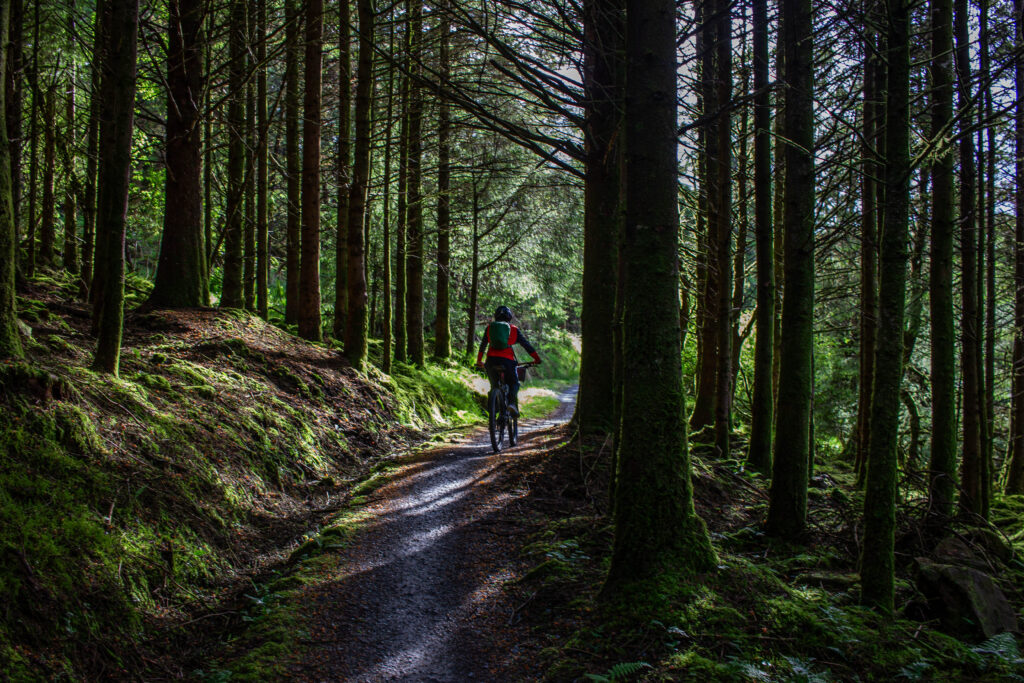
Last week the boy and I did a last-minute bikepacking trip along the longest of the mountain bike trails in Ballyhoura Trail Centre in County Limerick
My son had being keen to go bikepacking for ages and an extended long weekend gave us a window, albeit one with less than ideal weather. We chose Ballyhoura as it has Ireland’s largest network of purpose-built mountain bike trails with a total of 100km of trails spread across a range of routes and grades.
The plan was to tackle the longest loop, the 51km Castlepook trail which is graded red, getting half done on the first evening and finishing it in the morning.
Packing
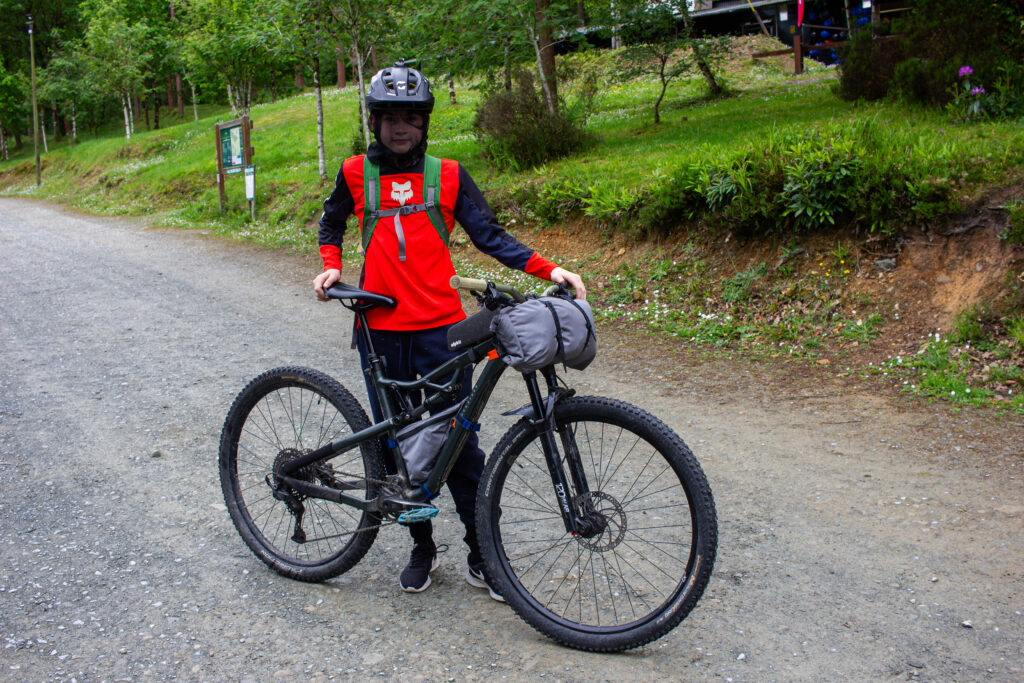
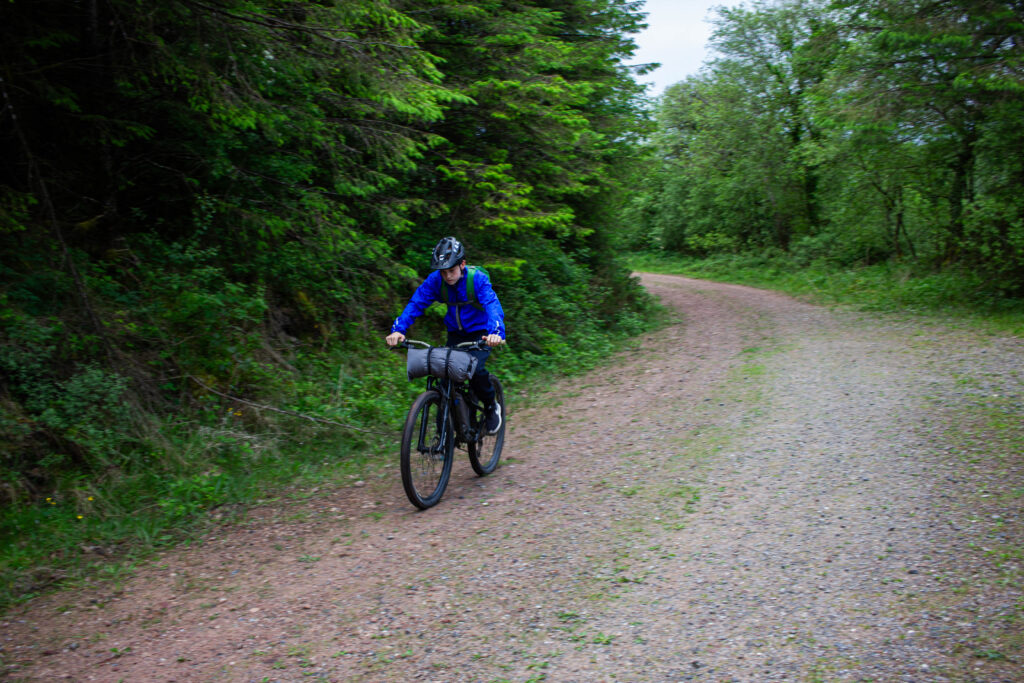
His bike is a full suspension which makes it a little more challenging to pack as there isn’t an option of a rear rack or large framebag. My bike is a gravel bike and can take a rear rack. Between us we easily fitted everything we needed for a night. The breakdown was as follows:
Full-suspension bike
- sleep gear (mat, sleeping bag, pillow, spare layers) in a handlebar bag (homemade, basically a long, narrow drybag strapped to the bars with 3 silicone straps. It was rock solid).
- waterbottle and rain gear in a small (homemade) framebag.
- small backpack (tent and poles)
- top tube bag (snacks)
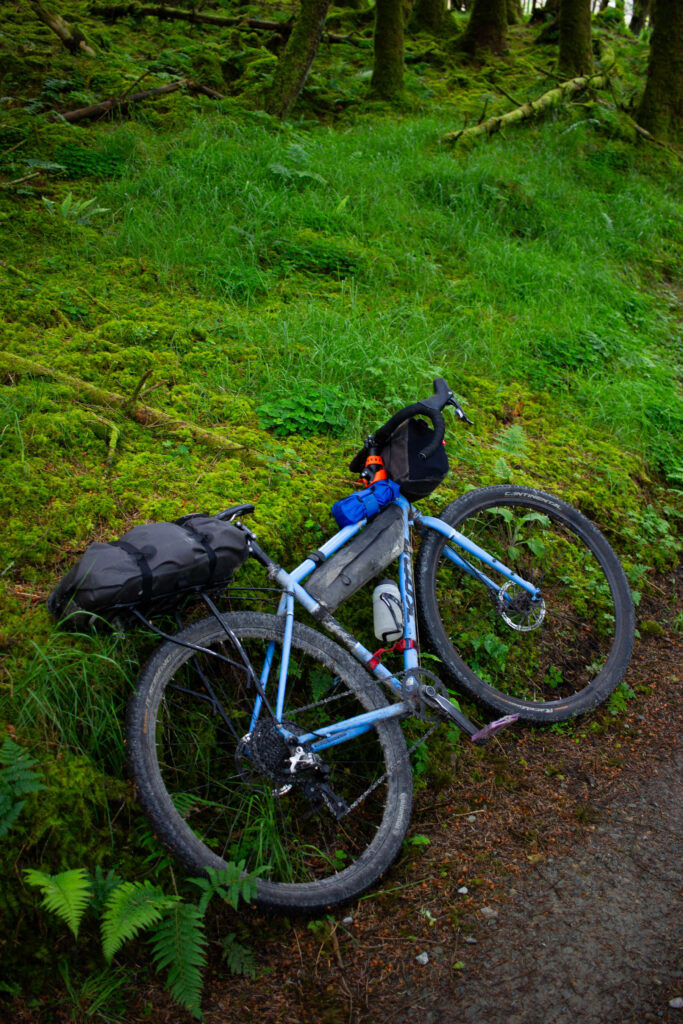
Gravel bike
- handlebar bag (food and cooking gear), bag by alpkit, it rattled around a little on the descents
- half-framebag (repair kit, first aid, toiletries, torch, raingear etc)
- rear rack with drybag on top(sleeping gear – pad, sleeping bag, pillow, spare layers)
- small dry bag on top tube (tools and spares)
Overall our bikes felt good, allowing us to take advantage of the flowing downhill trails without feeling overloaded on the climbs.
I’m a big fan of packing similar items together ie. all good together in one bag, sleeping gear in a single bag which can be easily removed to bring into the tent. Grouping items by use really helps, for example tent, poles and pegs should live in the same bag.
The First Evening
We arrived at the trailhead to be greeted by a cloud of midge. This meant that packing up was a rushed affair. We only had one midge net between us and the insect repellent I had brought was pretty much empty. We had test packed at home though so everything came together quickly enough.
Initally, the trails were quite confusing and we ended up stopping regularly to check the map (I use OsmAnd on my phone). I had a mechanical issue almost immediately as my chain get wedged between the cassette and the hub. I just about managed to reef it out, while being destroyed by midge, and I didn’t dare use my granny gear for the rest of the trip.
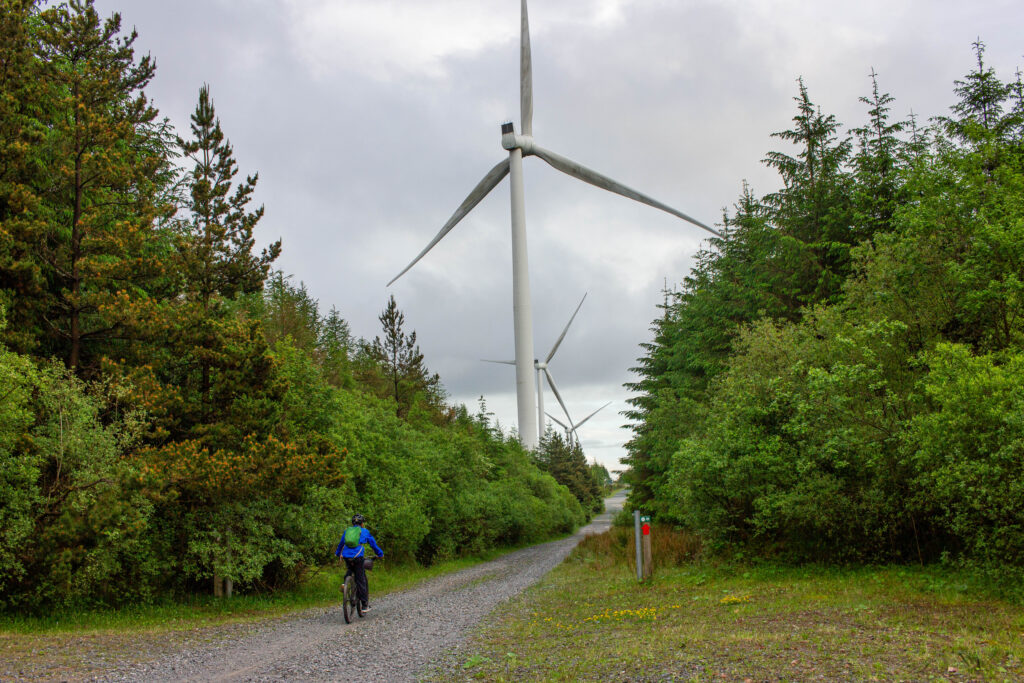
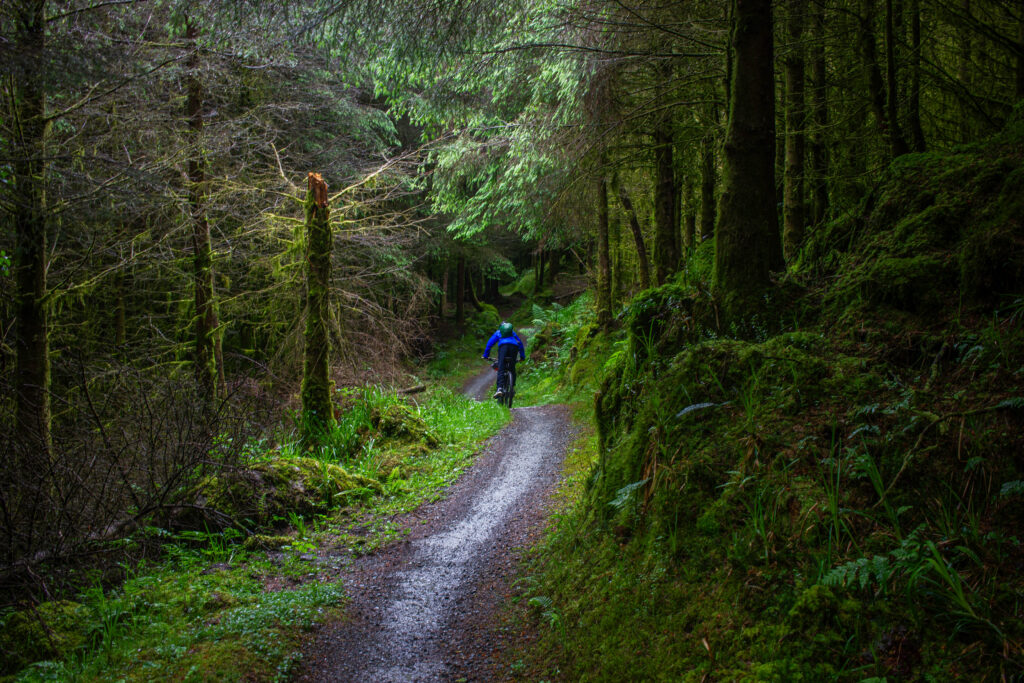
The route climbs and occasionally descends, the vast majority on nice manicured singletrack with the odd stretch of fire road. The scenery is good and the forest setting very pleasant. After three hours his legs tired and we ended up taking two shortcuts as it started to drizzle. We found a good flat spot near the wind turbines – but not too near, they are noisy. It was a little exposed to the wind, which was vital as the midge were still at it.
One thing to note – water isn’t that abundant along the route, we didn’t carry much and relied on refilling before dinner. We filled our bottles from a stream, the water seemed fine, if quite brown. You mightn’t be so happy to drink it, something to bear in mind.
A quick dinner and it was into bed by 10, tired. Overnight it was very windy and quite wet, but we were very comfortable in my new tent – a Durston xmid 2.
The Next Morning
We awoke to drizzle and has a quick breakfast in the tent before quickly packing the bikes. I threw my leg over mine, looking forward to a long, fun descent back to the car and noticed I had a flat front.
I wasn’t that surprised as the evening before on a red section I had smashed my rim into one of the few rocks on the trail. It was a miracle that the tube didn’t flat immediately, but it was obviously didn’t survive unscathed. I tend to run low pressure when on rough trails to take the edge away, obviously there is a need to strike a balance between comfort and the risk of a pinch flat. Definitely need to up the pressure when loaded.
Not to worry, I have a spare tube I though. I took it out and immediately I realised there was a problem, while it hadn’t ever been used it was in awful condition and didn’t hold any air. So I ended up walking the 10km back to the car, which was unfortunate, but it could have been worse. Lesson learnt, check your spares (and maybe bring a spare tube each).
The Trails
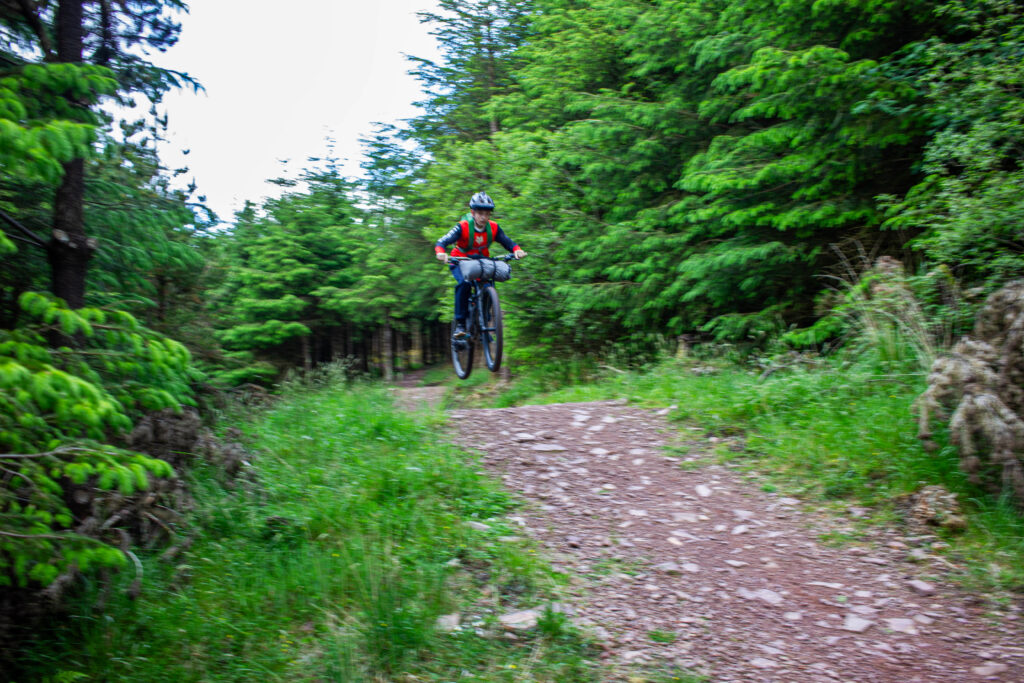
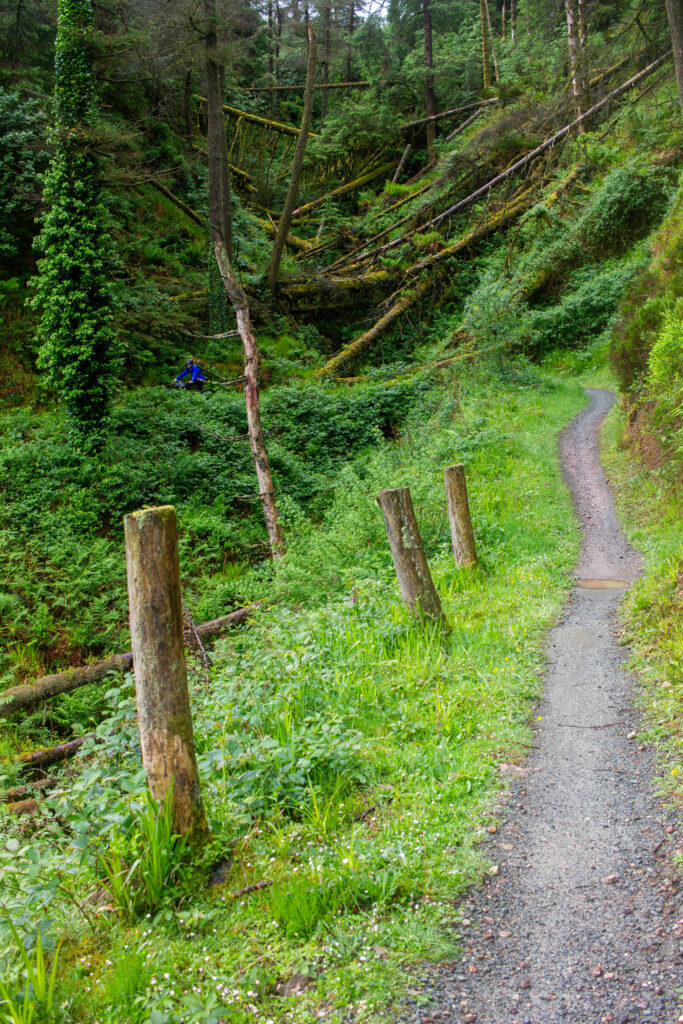
I think Ballyhoura is ideally suited to bikepacking as there is enough for an overnight trip on the longest loop, but also because the trails are relatively easy. We rode blues and reds and there wasn’t a huge difference between them. There wasn’t any real technical riding and the descends were flowing and fast and really enjoyable.
Rocky or rutted trails tend not to be that enjoyable with a full load, but we were able to go full gas on the descents as they were very smooth.
Lessons Learnt
Do a test pack before you leave the house.
If you are going to be far from the road bring an extra tube.
Worth carrying a midge net per person from April to September.
Need more tire pressure when riding a loaded bike.